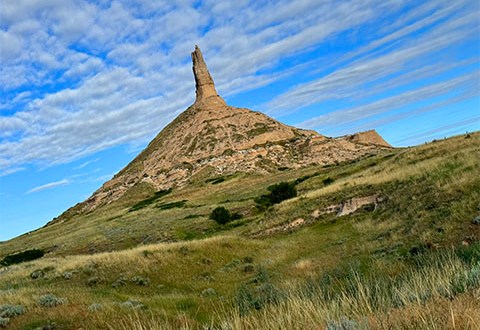
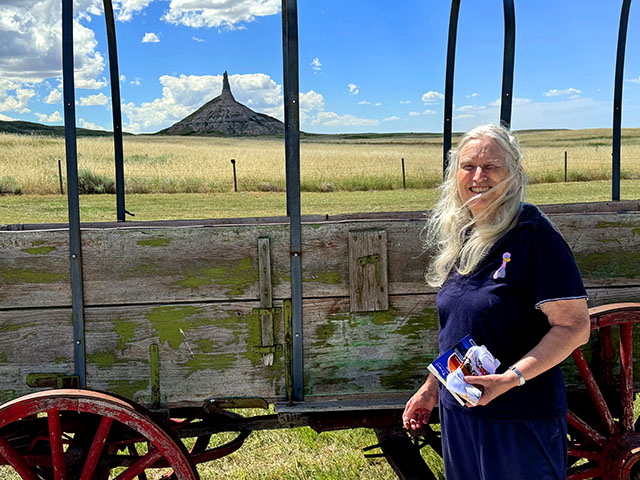
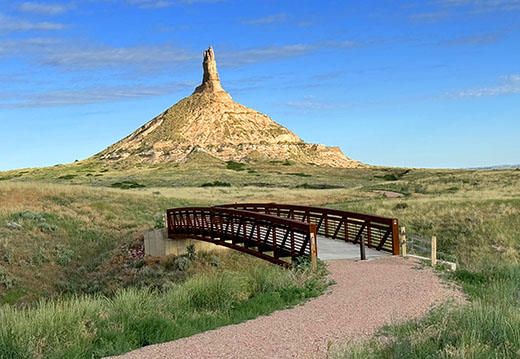
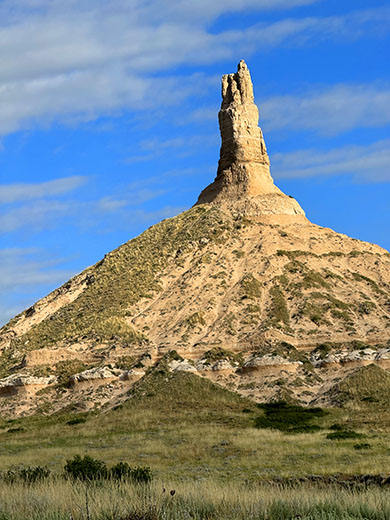
By the end of Day 6 we had evaded the predicted severe thunderstorms and made it east to Chimney Rock, one of the most famous landmarks on the Oregon Trail. After a trip to the museum and gift shop we called it a day in preparation for our long haul on Day 7 back west along the trail. We found a great Airbnb for the night in rural Bridgeport, NE. As we drove into the farm yard, a Red-headed Woodpecker flew up and into a tree; not an everyday bird for us.
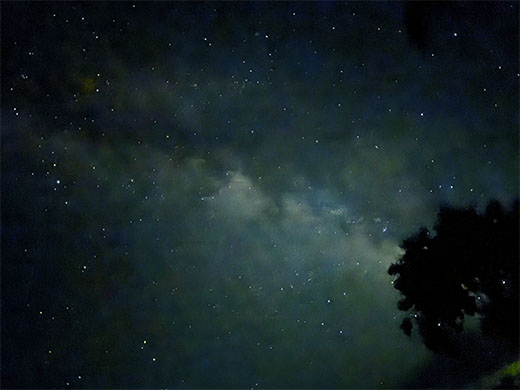
We were hoping for good and dark skies for the night, something else we no longer regularly experience. However, we were disappointed by the skies that still had significant light pollution, probably a class 4 Bortle sky.
Milky Way as seen from Bridgeport, NE; iPhone photo (1 second) taken at 11:50PM and enhanced using the AstroShader app.
The morning of Day 7 we returned to Chimney Rock and took the trail partly toward the rock. Among the 18 species of birds we found were a few that we do not usually encounter further west such as Orchard Oriole and Dickcissel.
Fort Laramie, WY
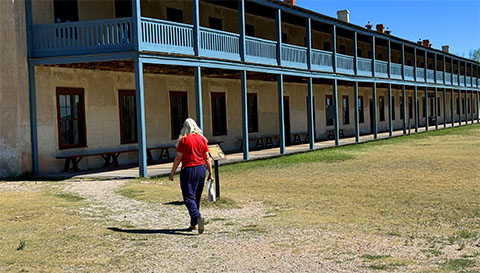
Our first major stop after leaving Chimney Rock was at Fort Laramie in Wyoming. This was not only a stop for trail immigrants, but a major base for the US military presence, especially during the American Indian wars.
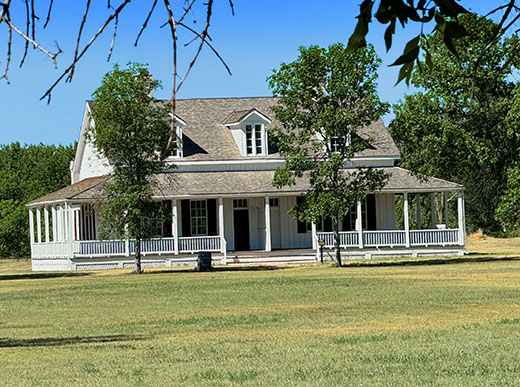
Fort Laramie captains’ quartersFort Laramie enlisted barracks
Register Cliff
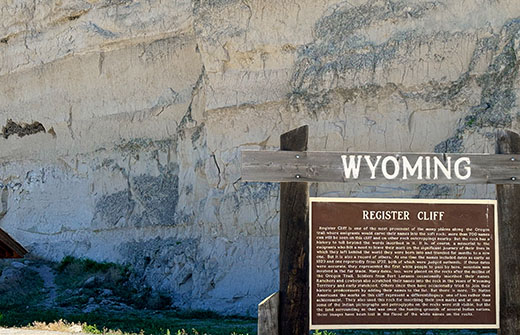
A short distance from Fort Laramie is a limestone formation on which many of the travelers carved their names and dates, Register Cliff. Many of the signatures have been copied and are on display at the Interpretative Center in Casper, where we saw them on Day 3.
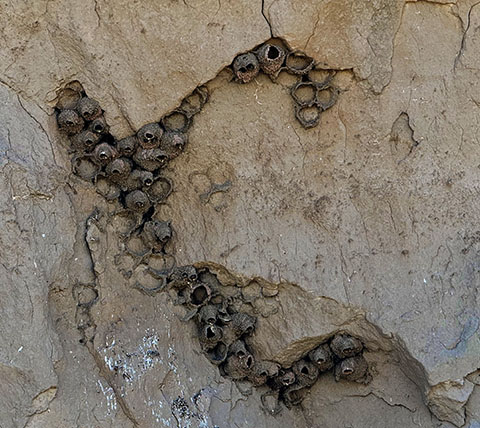
“Register Cliff is one of the most prominent of the many places along the Oregon trail where emigrants would carve their names into the soft rock; more than 700 names can still be seen on this cliff and on other rock outcroppings nearby. But the rock has a history to tell beyond the words inscribed in it. It is, of course, a memorial to the emigrants who felt a need to leave their mark on the significant journey of their lives in which they left behind the world they were born into and traveled for months to a new one. But it is also a record of others. At one time the names included dates as early as 1829 and one reportedly from 1797, both of which were judged authentic. If those dates were accurate, they represented the first white people to pass by here, mountain men involved in the fur trade. Many dates. too were placed on the rocks after the decline of the Oregon Trail. Soldiers from Fort Laramie occasionally inscribed their names. Ranchers and cowboys also scratched their names into the rock in the years of Wyoming Territory and early statehood. Others since then have occasionally tried to join their historic predecessors by adding their names to the list. But there is more. To Native Americans the marks on this cliff represent a different legacy., one of loss rather than achievement. They also used this rock for inscribing their own marks and at one time some of the Indian pictographs and petroglyphs on the rocks were still visible, but like the land surrounding us that was once the hunting grounds of several Indian nations, those images have been lost in the flood of the white names on the rocks.”Cliff Swallow nests on Register Cliff
After leaving Register Cliff we continued to follow the Oregon Trail as far as Casper, where we turned north and headed toward Red Lodge, MT, yet another haul.
 Kloshe Woods